
Peter Kerr is our resident UX Writer and a longtime NaNoWriMo (and Script Frenzy!) participant. We asked him to share a little bit about what UX Writing is and how he uses language to make NaNo 2.0 features more intuitive.
What is UX Writing?
UX Writing is the ancient art of being confused about language and trying to do something about it. You likely run into it all the time without thinking about how many hours went into something that seems simple on the surface.
Take the humble stop sign.

Photo credit Stephen Andrews via Pexels
On the surface, it’s simple. You see it; your intuition and experience are enough for you to follow the command.
But it’s a designed experience. It’s an octagon because as you’re driving down the street at night with poor lighting, the silhouette is identifiable enough for you to take note. Your brain sees eight sides and thinks, “There’s potential danger here.”
STOP is a direct command. If someone shouts that in the middle of a crowded room, you’re most likely freezing in place for at least a few seconds to make sure all is safe (and there are no spiders). STOP is used here for its simplicity. There’s no way of thinking around it or misinterpreting it. You see STOP, and you stop. Full stop.
NaNo 2.0 UX Writing
At NaNo 2.0 HQ, we’re no different in how obsessive we are over every word you see. Is a message too colloquial? Will that joke land? Just what are users trying to do on our site, and how do we help them accomplish that?
When designing the new tracker, we thought a lot about that last question. Will you be updating a word count? Logging your work? Or, as we ultimately decided to go with, updating your progress?
Here’s how we thought through each option…
Option 1
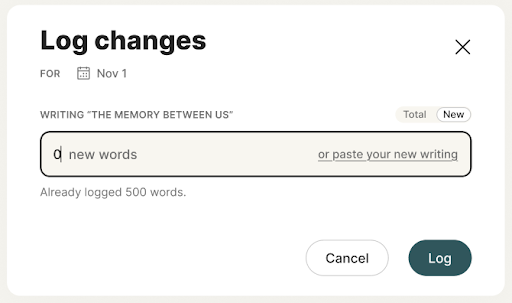
Logging felt too technical. We should only be logging things on the deck of the USS Enterprise as we boldly explore the universe.
Option 2
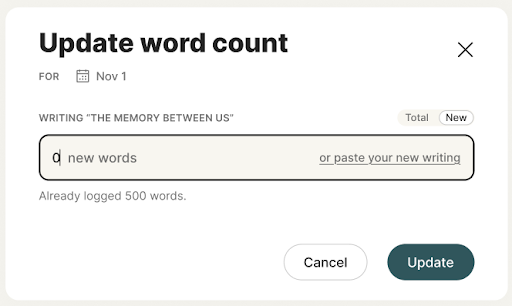
Updating a word count felt closer, but we know that many folks like to use their NaNo month to edit one of their trunk stories too. Word count kind of still fits, but not comfortably.
Option 3
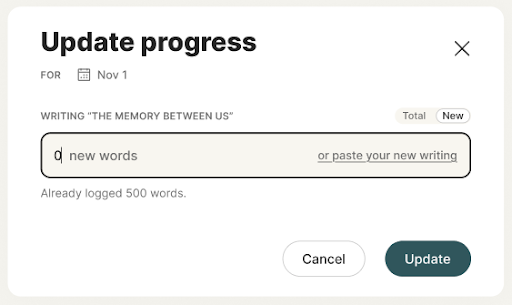
Update progress fits all the use cases we have. It is empowering, knowing we’re not just adding to a pile of words on top of words. We’re making progress during the month, sure. But each update is also progress towards goals and dreams.
That’s the job. You try your best to learn someone’s perspective, and then you express that through the word choices you make. Good UX Writing is invisible, and if we’ve done things right, you’ll never even consider someone spent weeks agonizing over the button you just pressed.
You can apply this philosophy to your creative work too. What does your character’s name say about who they are? Or where they’re going in life? How is your fantasy character navigating their journey to throw magical jewelry in a volcano? Was there a meticulous Orc town planner who has set our mile markers? Or are they getting by with a map and a vibe?